


























High Prescription Guide

High Prescription Guide

Determine the perfect lens and frame style based on your prescription

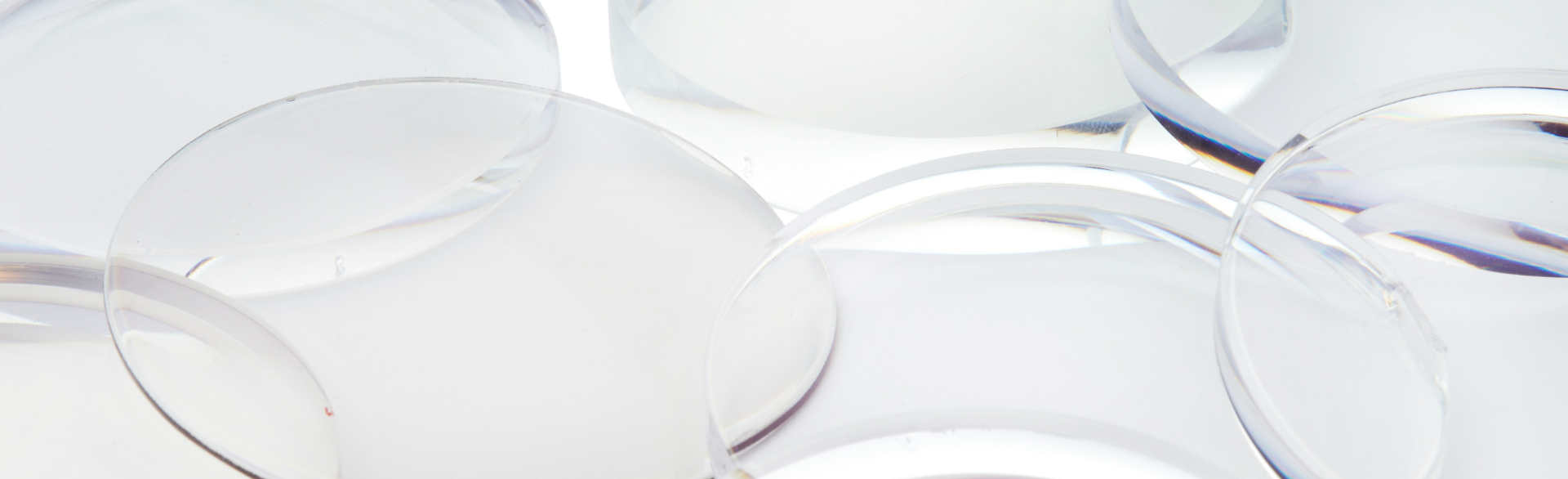
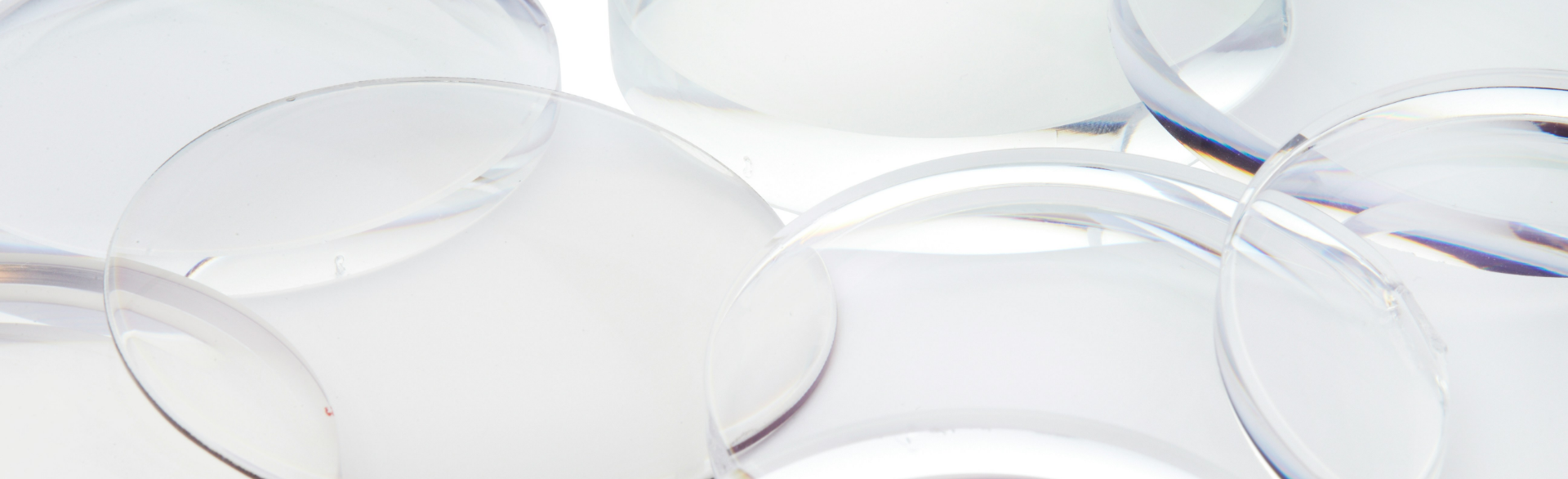
clear glasses lenses
image of clear lenses

High Prescription Guide

How are prescription and lens index connected?

Lens index indicates how effectively the lens refracts light, and the higher the index, the thinner the lens. In the past, a strong prescription required thick lenses, but technology and high index lenses have changed that.

How are prescription and lens index connected?

Lens index indicates how effectively the lens refracts light, and the higher the index, the thinner the lens.

In the past, a strong prescription required thick lenses, but technology and high index lenses have changed that.

Recommended lens index by prescription range

Standard plastic lenses have an index of 1.50, while thinner lenses have an index of 1.59, 1.61, 1.67, or 1.74.
Below you can see which lens index is best for your prescription range.

Recommended lens index by prescription range

Standard plastic lenses have an index of 1.50, while thinner lenses have an index of 1.59, 1.61, 1.67, or 1.74.

Below you can see which lens index is best for your prescription range.

Why is frame size important?

Choosing the best frame size in relation to your pupillary distance (PD) is important for the lenses to fit in it correctly. Your PD is the distance from one pupil to another.

Depending on your prescription and lens index, certain frame materials, shapes, and rim types may be a better option than others, for both aesthetic and practical reasons.

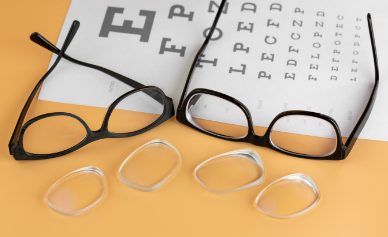
glasses frames with lenses on a table

Why is frame size important?

Choosing the best frame size in relation to your pupillary distance (PD) is important for the lenses
to fit in it correctly.

Your PD is the distance from one
pupil to another.
Glasses frames and eyeglass lenses on a table

Depending on your prescription and lens index, certain frame materials, shapes, and rim types may be a better option than others, for both aesthetic and practical reasons.

+RX frames and lens recommendations

Frame styles for farsighted prescriptions

Here are the best frames styles and best lens indexes suited to those with a plus prescription.

Frame styles for farsighted prescriptions

Here are the best frames styles
and best lens indexes suited to those with a plus prescription.

+RX frames and lens recommendations

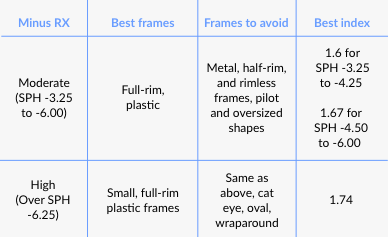
Frame recommendations for nearsighted prescriptions

Here are the best frames styles and best lens indexes suited to those with a minus prescription.

-rx frame and lens recommendations

Frame recommendations for nearsighted prescriptions

Here are the best frames styles
and best lens indexes suited to those with a minus prescription.

-rx frame and lens recommendations

Speak to a qualified optician

Got questions about eye care? We're here to help.
For guidance you can trust, ask our in-house opticians.

Speak to a qualified optician

Got questions about eye care? We're here to help.
For guidance you can trust, ask our in-house opticians.

FAQs

Both types of lenses are made with plastic and refract light to help correct vision. However high index lenses are made with a more dense plastic which refracts the light more efficiently.

A basic plastic lens with an index of 1.50 and a high index lens with an index of 1.67 could have the same prescription, but the high index lens will be much thinner.

This is because it requires much less material to do the same job, making it perfect for people with higher prescriptions.

Your PD is the distance in mm from one pupil to the other, and is important that the PD of your lenses matches up to this for comfortable vision.

When the center of the lens needs to be moved away from the center of the frame to fit your PD, the amount in mm is called 'decentration'.

If there is too much decentration, your lenses will be too thick and heavy and the frames may slip down your nose or dig into the sides of your head, causing discomfort. This can be avoided when the frame's PD and your PD are as similar as possible.

You can use our online tool to measure your PD. All you need is a smartphone or laptop, a stable surface and a magnetic card.

Yes, high index lenses can be fitted to sunglasses. It's important to remember that as the lenses are reflective, using a polarized or mirrored coating is beneficial.

Also, always consider the best frame styles based on your desired lens index.