


















What Are Progressive Lenses?
Reviewed by
Maria Horan FBDO
Overview
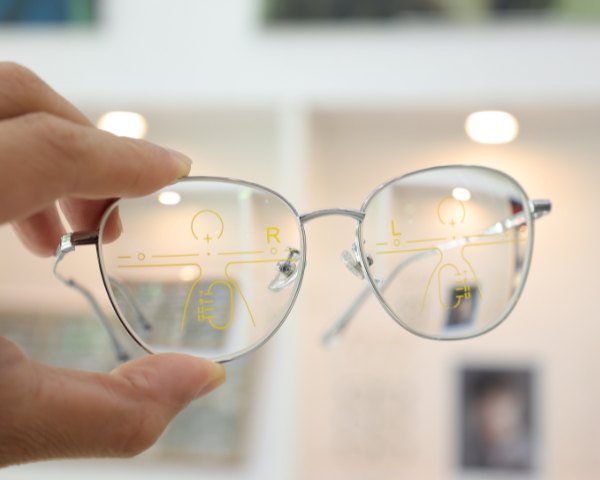
Progressive lenses are multifocal lenses that correct near, intermediate, and distance vision in a single lens with no visible dividing lines.
Progressive lenses correct near, intermediate, and distance vision in one pair of glasses
They’re designed for people with multiple prescriptions, especially those with presbyopia
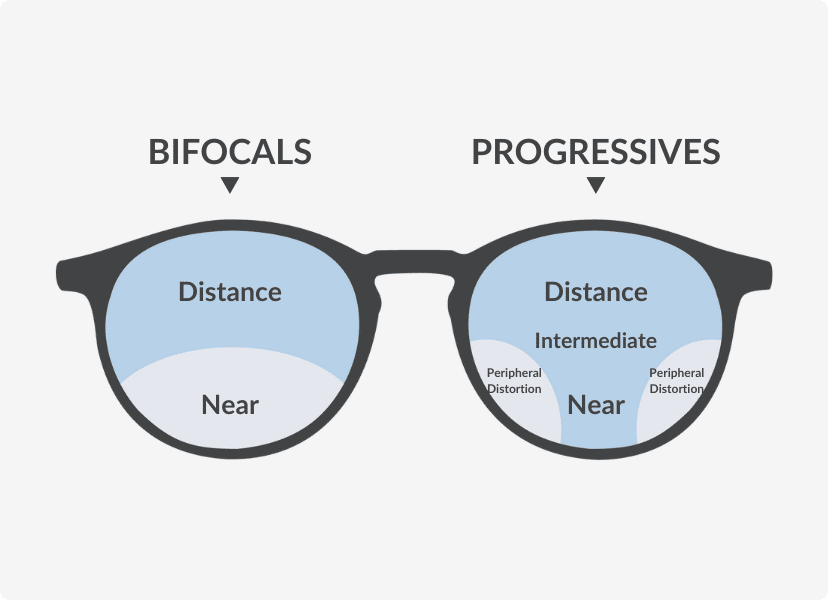
Unlike bifocals, they have no visible lines and offer a smooth visual experience
Ideal if you want to stop switching between reading glasses and regular glasses
EXPERT'S TIP!
“If you’re over 40 and starting to struggle with close-up tasks, like reading your phone, progressive lenses are likely the right next step. They make everyday life easier without the inconvenience of swapping glasses.“
Maria Horan, Dispensing Optician
Progressive lenses vs bifocals
Progressive lenses offer a more natural and modern solution than bifocals. They let you move between tasks like reading, working on a laptop, and driving, without switching glasses or dealing with image jumps.
How do progressive lenses work?
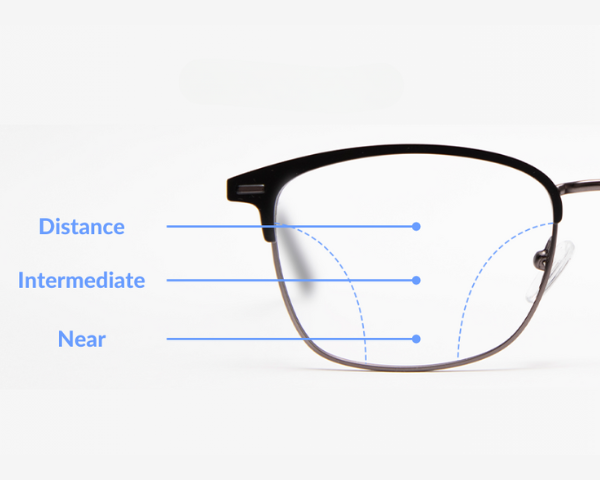
Each part of the lens supports a different viewing distance:
Top zone: distance vision (e.g., driving or walking)
Middle zone: intermediate vision (e.g., computer work)
Bottom zone: near vision (e.g., reading or using a phone)
These zones transition smoothly into one another, allowing you to focus across all distances without switching glasses.
Do I need progressive lenses?
You likely need progressive lenses if you:
- Hold your phone at arm’s length to read it
- Already wear reading glasses but also need distance correction
- Remove your glasses to read then put them back on
- Are 40+ and notice your near vision getting blurry
Progressives are often recommended if:
You have presbyopia or trouble focusing on close-up objects
You already wear glasses for distance, but now you also need glasses for reading
You want one pair of glasses for all activities
You experience eye strain when shifting focus between distances
An eye exam will confirm if progressive lenses are the right choice for you. Most people over 40 benefit from them, especially as near vision naturally declines with age.
Which progressive lens is right for you?
If you spend long hours at a screen or need sharper near vision, the Deluxe range offers noticeable benefits.
Our Premium progressive lenses are a reliable everyday option, offering comfort with scratch-resistant and anti-reflective coatings.
How long does it take to get used to progressive lenses?
Adjusting to progressive lenses takes time, but it’s manageable with a few simple habits:
Move your head (not just your eyes) when changing focus
Look down with your eyes (not your head) when reading
Look straight ahead for distance tasks like using a screen
Stick to your progressives during the adjustment period (avoid switching back to your old glasses)
Give it a week or two, most people adapt quickly
Most people fully adapt to progressive lenses within 1–2 weeks. If discomfort or distortion persists beyond 2–3 weeks, contact your optician — the prescription or fitting may need adjusting.
Still unsure?
Progressive lenses are a long-term solution for people who want to see clearly at every distance without juggling multiple pairs of glasses. They offer convenience, comfort, and clarity, all in one lens.
Speak to one of our certified optical experts for personalized advice and care.